January 14, 2025 · 4 min read
Dunes and Silence
Three nights in the Sahara taught me how little I need to say, and how much I want to look.
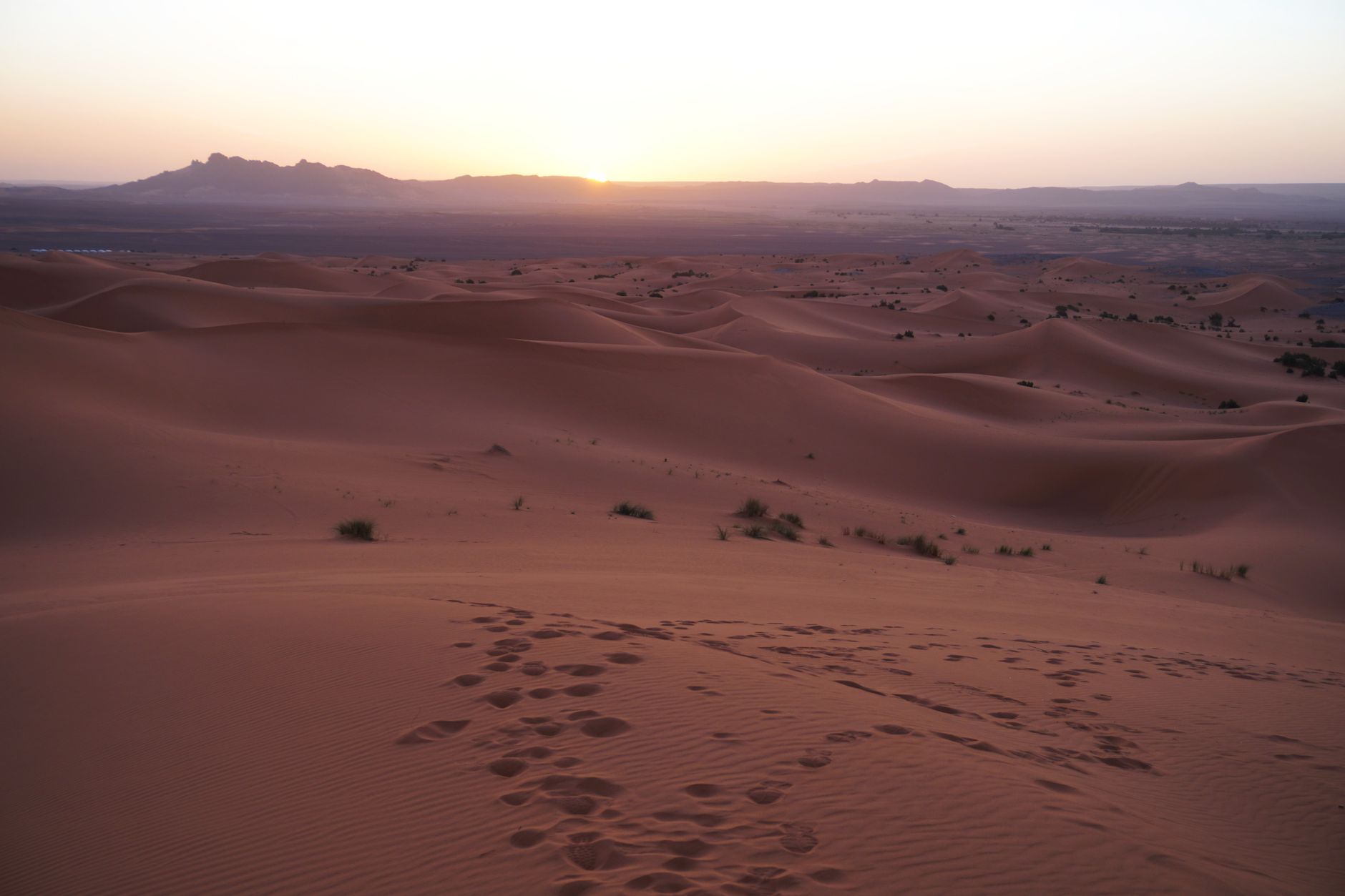
We left the last village at three in the afternoon, a guide named Hamid walking ahead with the camels, me swaying behind on the third. The road ended without ceremony, and then there was only sand, rising and falling in long ridges to the horizon.
I had come to Erg Chebbi for the photographs, if I am honest. Everyone has seen the pictures. What nobody tells you is how loud the quiet becomes. Within an hour I could hear the creak of the saddle, the soft pad of hooves, my own heartbeat. Within two, I could hear my own thoughts being unusually rude.
Hamid spoke little, and I came to love that about him. Now and then he pointed: a beetle track, a distant ridge shaped like a sleeping dog, a dark line on the horizon that turned out to be a nomad’s tent. At dusk we stopped, and he made tea over a small fire in three glasses, pouring from a height to give it a foam, handing me the first with a nod.
The camp was six tents and a kitchen, tucked into a hollow between dunes. There were other travellers, but we barely spoke. After dinner, people drifted away one by one to find a private ridge, wrapped in blankets, and lay down to look up. I have seen a lot of skies. I had not seen that one. The stars were not scattered but layered, depth behind depth, the Milky Way a pale road running overhead.
Silence is not the absence of sound. It is the presence of attention.
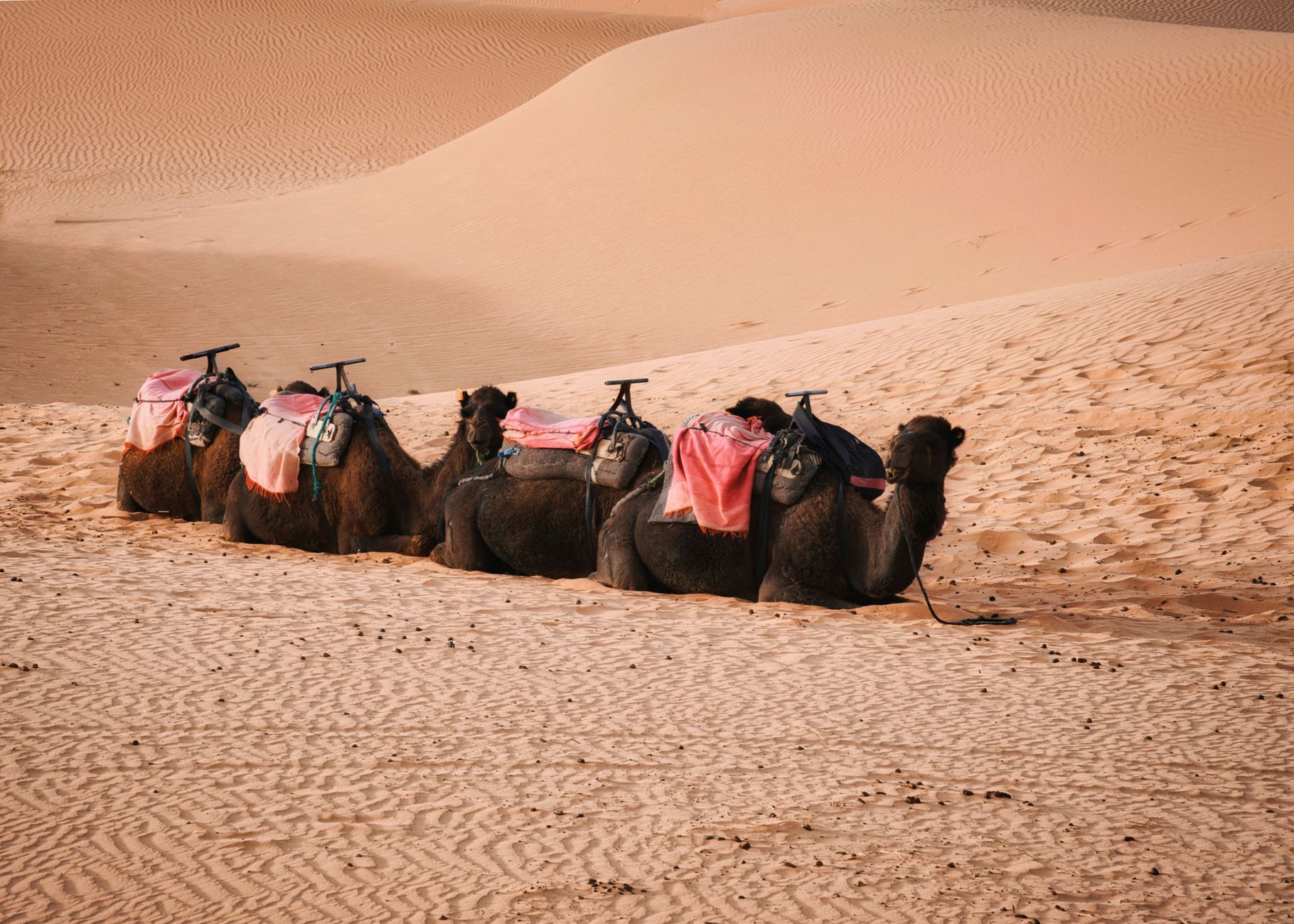
Morning light on dunes is the reason photographers come, and it is every bit as good as claimed. I woke at five, climbed the nearest ridge in cold blue air, and waited. The sun arrived like a slow switch. Each crest caught fire in sequence; shadows pooled in the hollows; and across the whole sweep of sand, ripples appeared that had been invisible a minute earlier.
I made perhaps thirty frames and kept four. The best is of my own footprints, a single wandering line climbing the face of a dune, small and certain against all that emptiness. I did not plan it. I only looked back before I sat down.
On the third day we rode out. The village appeared first as a smudge, then as walls, then as noise: mopeds, a radio, children shouting. I was surprised to feel a little grief. The desert had asked nothing of me except to pay attention, and I had not realised how rarely I am asked.
If you go, bring a scarf, a good lens cloth and fewer plans than you think. Let the sand be a teacher. It is patient, and it will not repeat itself.
Letters from the road
One quiet email a month: new notes, a photograph, and a book worth carrying.